Cam model training 2027 exists because income on camera is built from skills, not luck. The performers who earn well are rarely the ones who switched on a camera and waited. They learned how to hold a room, present themselves, promote a schedule, and keep showing up when a night goes quiet. Training takes the guesswork out of the first year and replaces it with a system you improve week by week.
Quick answer: Cam model training 2027 covers six areas: platform fluency, so you know every tool and setting that affects visibility and earnings; room presence, the conversation skills that keep viewers engaged; technical reliability in lighting, audio and connection; marketing that turns casual viewers into regulars; consistency systems for scheduling and tracking; and boundaries, privacy and platform rules. The programs worth paying for are done-with-you accelerators with real-time feedback, not folders of videos. For the identity side, see our guide to cam model personal branding.
Why Training Matters More Than Ever
Getting approved on a platform is fast. The application is not the work; the work starts the moment you are approved and expected to perform. Industry guidance agrees that models with no experience need training before steady income is realistic, which is why studios and agencies run new performers through an onboarding period before handing them a full schedule. The skills involved are not obvious until you are live in front of an audience that can leave at any second.
There is also information overload. Advice about webcam work arrives in fragments: a forum post here, a short video there, an equipment list that contradicts the last one. Training exists because someone has to organize that flood into a sequence you can follow. Without a sequence, most new models spend their first months testing random tactics and blaming themselves for inconsistent results.
What Cam Model Training 2027 Actually Covers
Platform interface and tools
Training should begin with the machinery: how your profile appears to viewers, how availability is displayed, how private and group interactions are triggered, and where your earnings data lives. Knowing the interface cold means you stop fumbling during the moments that matter most.
Interaction and room presence
Conversation is the engine of cam work: breaking the ice, keeping a room alive when it goes quiet, and reading whether someone wants attention, direction or space. Good presence is not about being loud. It is about being responsive, remembering regulars, managing several conversations at once, and making a new visitor feel like they arrived at the right time.
Technical setup and reliability
The skill underneath every gear list is reliability: lighting that flatters you, audio that does not crackle, a stable connection, and enough troubleshooting knowledge to fix a problem mid-stream instead of losing a paying viewer. Learn the equipment you own thoroughly before buying anything else.
Marketing and visibility
A great stream nobody finds earns nothing. Marketing for a cam model means how you present yourself across profiles, how you build anticipation for your schedule, how you turn casual viewers into regulars, and how you communicate what a session involves without oversharing. It is a learnable sequence, not a personality trait.
Systems and real-time feedback
The stronger training models are done-with-you accelerators rather than passive courses: you install systems together with a coach, optimize streams in real time, and get guidance on decisions instead of leaving results to chance. That feedback loop is the difference between reading advice and applying it correctly.
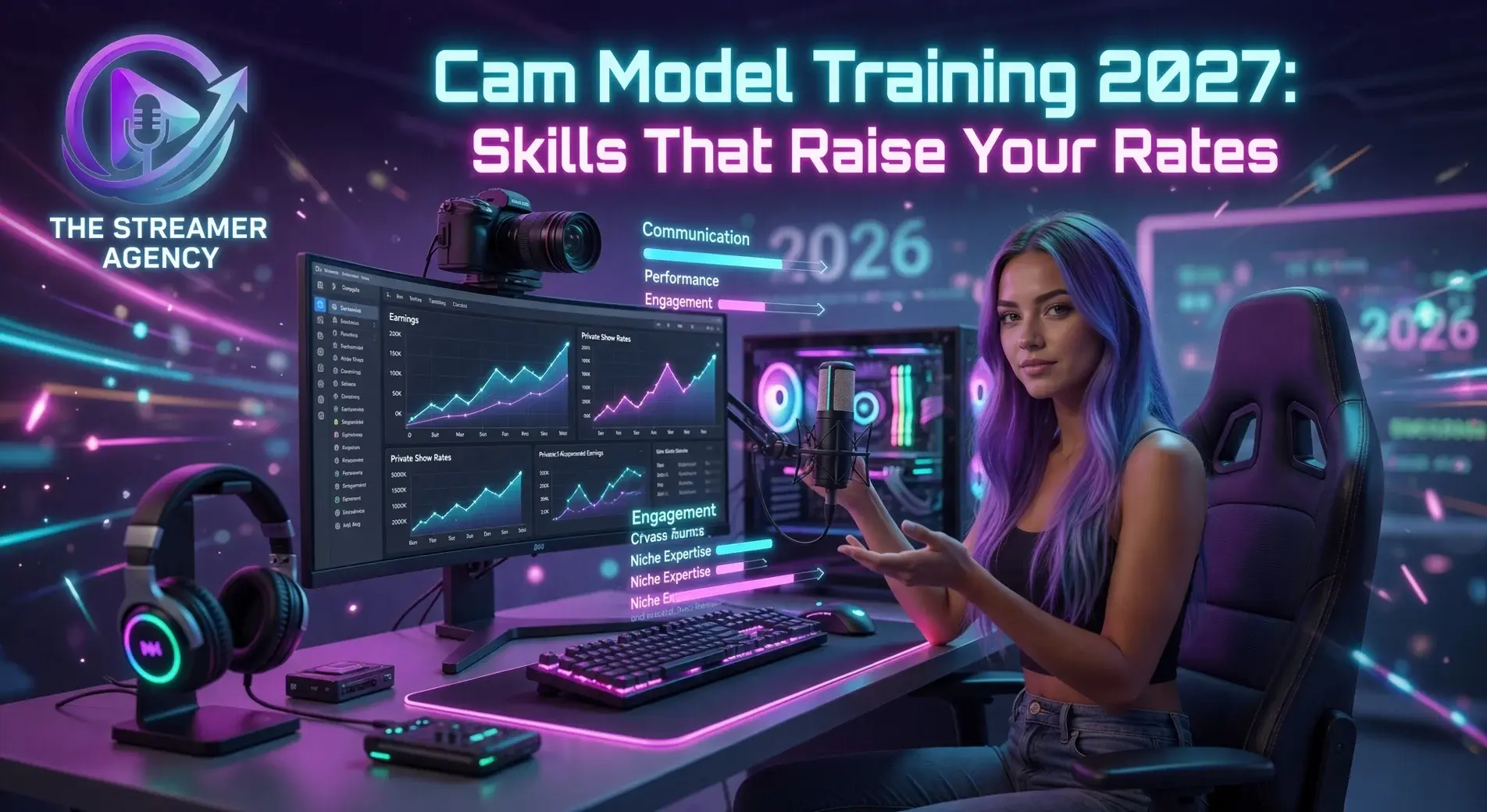
The Skills That Actually Move Your Rate
- Conversation control, so you can lead a room, change its energy, and recover from silences
- Boundary setting, so you can decline requests clearly without losing the room's mood
- Consistency, so regulars know when to find you and build a habit around your schedule
- Technical reliability, so paying viewers never watch you fight your own equipment
- Personal branding, so your profile, your room and your tone point at the same identity
- Marketing discipline, so visibility does not depend on luck or one platform's mood
- Business admin, so you track your numbers, hours and best sessions instead of guessing
Rates are set by the value a viewer believes they get from spending time with you, and every lever on that list raises it.
What the Early Path Looks Like
- Do your research. Understand what the job involves, what it does not, and what you are comfortable with before you commit.
- Choose your platform. Compare payouts, visibility and audience type, and pick one to focus on first.
- Set up your space and equipment. Build a background and lighting setup you can repeat every session, not just for a first photo.
- Create your content and schedule. Decide what sessions look like, how often you go live, and how you tell people about it.
None of those steps involve earning money yet, and that is normal. The money phase follows a steady foundation, which is why skipping setup and branding to go straight to long hours online produces frustration rather than income.
Consistency Is the Skill Almost Nobody Trains
Spend time in model communities and a pattern appears: experienced performers describing years on camera, decent success, and very little consistency. That is not a talent problem, it is a structure problem. Earning steadily depends on showing up predictably, working the same core hours long enough for regulars to build a routine around you, and reviewing what changed when a week performs worse than the last. Consistency is also the hardest skill to practice alone, because nobody notices when you skip. A program with scheduled check-ins turns it from a willpower problem into an accountability system, which is often what separates casual earnings from reliable ones.
Safety, Boundaries and the Rules Belong in Training
Any program worth your time addresses privacy, personal boundaries and the rules of the platform you work on. Verify the specifics yourself rather than relying on secondhand advice: platform terms, identity and payout requirements, taxation and local rules vary by country and change over time, so confirm them with official documentation and a qualified professional in your area. Training should teach you how to protect your personal information, how to decline requests, and how to escalate problems through official channels.
How to Choose a Program
Ask direct questions before signing up for anything. Who delivers the training, and have they worked on camera themselves? Is it live and interactive, or a folder of videos you will never open? What happens after week one when motivation dips? Are you getting a system you own, or renting advice you cannot repeat once you leave? The Streamer Agency pairs management with structured coaching through The Streamer Academy, covering audience growth, monetization, branding and security habits for cam models, streamers and influencers, with training that adapts to your numbers instead of a fixed curriculum. Apply here, and see what modern cam agencies actually do for how management and training fit together.
Frequently Asked Questions
How long does cam model training 2027 take?
There is no single timeline, because it depends on the hours you can dedicate each week. Application and onboarding move quickly; the skill-building phase that follows is ongoing. Most models spend their first months learning the platform, refining their setup and building a schedule before steady results show.
Do I need experience to start cam model training?
No. Training programs are built for newcomers, and onboarding typically covers the platform interface, its tools, and how to interact with viewers. Starting with zero experience is normal, and it is the reason structured training exists at all.
What skills do cam models need to raise their rates?
Conversation control, boundary setting, consistency, technical reliability, personal branding and marketing. Technical ability keeps viewers in the room, conversation keeps them engaged, and marketing keeps new people arriving. Rates rise when viewers believe their time with you is worth more, which comes from delivering all of those together.
Is self-teaching enough, or should I join an agency?
Self-teaching works if you are disciplined about research and tracking. Its weakness is feedback, because nobody tells you what you are doing wrong. Agency training adds structure, real-time review and accountability, which is usually what fixes the inconsistency experienced models describe.
How do I apply to a cam modeling agency or training program?
Expect a short application followed by a conversation about your goals, comfort levels and schedule. Read the program's description carefully and check what support you receive after onboarding. Confirm the platform's own requirements separately, including identity and payout verification, since those rules come from the platform rather than the agency.