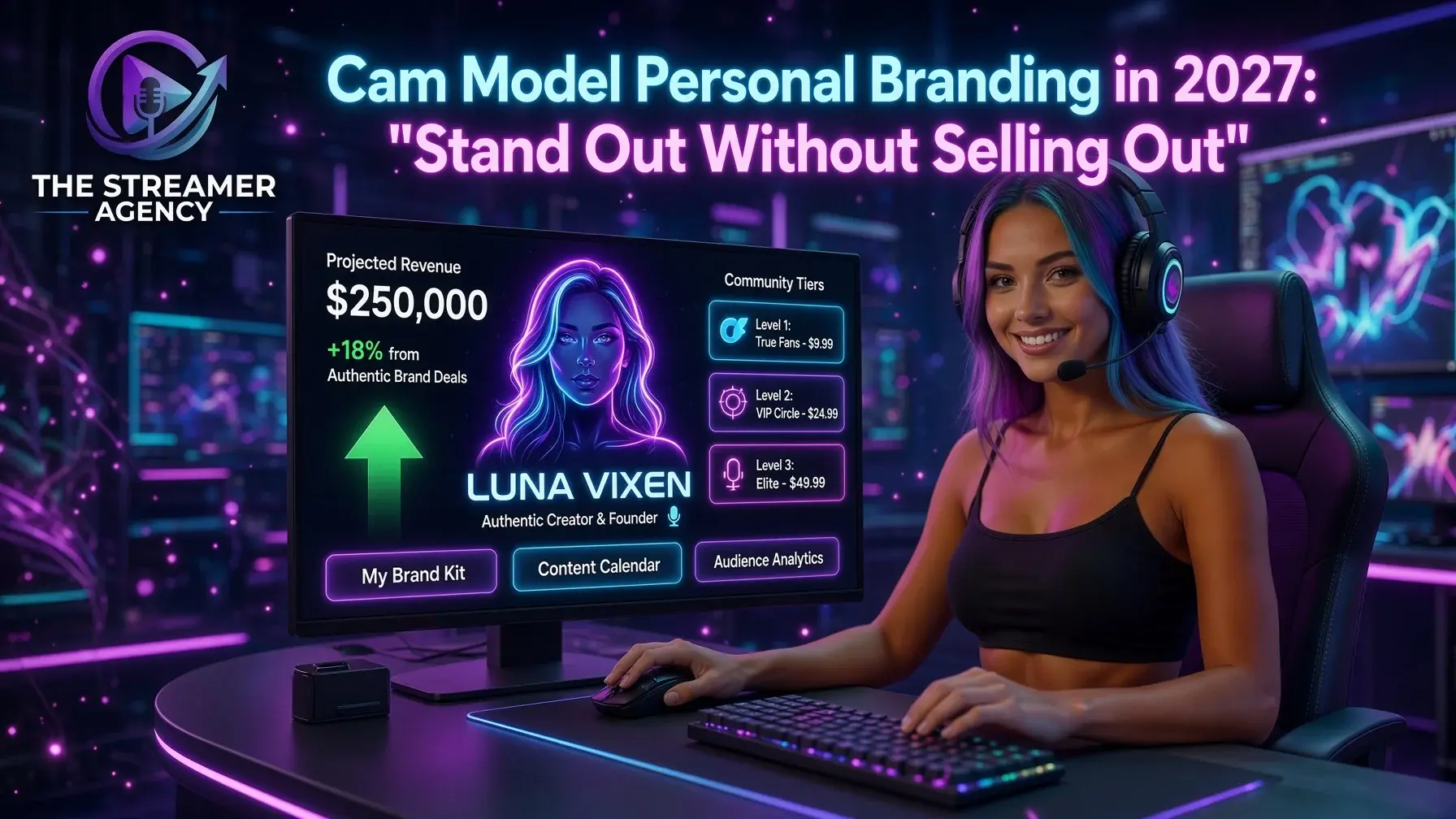
Cam model personal branding 2027 is the discipline of being findable, memorable and consistent without turning yourself into a costume you resent wearing. Your face, voice, personality and boundaries are the product, which makes the stakes higher than they are for a consultant or a founder. Standing out and selling out are not the same thing, and the models who last figured that out early.
Quick answer: Cam model personal branding 2027 runs on three pillars managed together: organic content (your schedule, clips, teasers and socials), digital credibility (matching handles, verified profiles, directory listings, collab appearances), and authority that exists outside any single platform (collaborations, interviews, community presence). Polish the packaging, keep the person, and write your boundaries down before anyone tests them. This updates our 2026 guide on cam model personal branding with the structure that compounds.
What Personal Branding Means When You Are the Product
Strip away the jargon and a personal brand is a deliberately built public reputation: a structure designed to transfer trust and attention from the person to the work. It is not a logo, a color palette or a catchphrase. It is the answer a viewer gives when a friend asks, "What is she like?"
For a cam model that answer comes down to a handful of things. What kind of show do you run? What is the energy in your room: warm, chaotic, teasing, calm, funny? What do you reliably show up for, and what do you reliably refuse? Viewers make spending decisions on those signals. A model with a clear answer gets repeat business. A model with no answer competes on novelty alone, which is the most exhausting business model in the industry.
The Three Pillars of Cam Model Personal Branding 2027
Branding playbooks from other industries describe a structure that translates directly to cam work: three concurrent channels that only compound when managed together. Skip one and the other two stall.
- Organic content: consistent public output that shows how you think and work. For a model: your stream schedule, clips, social posts, teasers, and behind-the-scenes moments.
- Digital credibility: evidence that other people vouch for you. Matching profiles and handles everywhere, verified accounts, reviews, directory listings, collab appearances.
- Off-platform authority: proof that exists outside any single site. Collaborations with other creators, interviews, event appearances, community projects.
The point of running all three is not vanity. It is risk. If all your visibility lives on one platform, one policy change can erase years of work. Pillars two and three keep your name searchable and your income reachable when a single channel goes sideways. That platform-independence logic is the same one behind building a brand that compounds for years.
The Authenticity Paradox: Professional Without the Costume
The problem every model eventually faces: how to look professional and still sound like yourself. The working answer is to fix the surface and leave the substance alone. Your visual presentation, bio, pinned posts, lighting and framing are craft decisions, so polish them deliberately. Your humor, your accent, your weird specific interests are the substance, so keep them.
Models often do the opposite: invent a persona from scratch to seem more appealing, then find the persona does not know what to say when a regular asks a genuine question. Polish the packaging. Keep the person. That combination reads as both professional and real, and it is far easier to maintain across a four-hour stream than a performance you have to remember. If you want a deliberate stage identity anyway, build it from one real trait, the way our streamer alter ego guide lays out.
Visual Identity Without Oversharing
If all your existing images are low-light screenshots, you have no visual asset that works outside the room. You do not need a studio production. A small set of clean, well-lit, on-brand images you own gives you profile pictures, link pages, social headers and press material for years. AI headshot and design tools can supplement that set, but treat them as supplements to real photos, not replacements, and read the usage terms before uploading anything of yourself anywhere.
Where Branding Stops and Selling Out Starts
Selling out means letting someone else's expectations overwrite your boundaries, and it rarely happens in one dramatic moment. It happens through a hundred small yeses: a custom you never wanted to offer, a collab you did not vet, a trend that pulled you somewhere you did not want to be, a schedule that quietly ate your sleep.
The defense is unglamorous and it works:
- Write down what you will not do, and read the list before saying yes to anything new
- Keep a short boundary statement in your bio or pinned post so new viewers learn the rules without you repeating them
- Separate working accounts from your private life completely: phone number, email, and the name on your payment processing
- Vet every collaboration like a business deal, because it is one
A brand you control is one you can walk away from at the end of a shift.
Why Branding Compounds Instead of Spiking
Branding playbooks sketch a timeline worth borrowing as a shape, not a promise: consistency and matching profiles bring search and recommendation traffic in the first 90 days, regulars turn into spenders and collab requests around six months, and by month twelve opportunity starts arriving without you chasing it, because your name is attached to a clear idea.
This is why viral moments are a poor strategy on their own. A spike gives you traffic. A brand gives that traffic a reason to come back next week.
Pick Fewer Platforms and Own More of the Relationship
Chasing every new app is the fastest way to look like everyone else and burn out doing it. Choose the two or three places your audience actually spends time and go deep. Then build at least one channel you control directly, an email list, a fan club or a members area, so a platform decision is never a career decision.
Consistency beats volume: same handle, same profile photo, same tone, same rhythm everywhere. Fragmented identities read as a different person each time, and viewers do not build loyalty to strangers they keep meeting for the first time. The cross-platform mechanics are in our guide to a consistent brand image across platforms.
Mistakes That Quietly Cost You Money
- Rebranding every few months because growth feels slow, which resets recognition each time
- Copying the top model in your category instead of occupying a niche nobody else serves
- Publishing images and clips that do not match the persona you stream as
- Treating DMs, chat and socials as separate businesses with separate voices
- Setting boundaries only after something has already gone wrong
Where Structured Support Fits
Most of this is learnable, but it is hard to see your own brand clearly from inside it. The Streamer Agency works with cam models, streamers and influencers on audience growth, monetization and sustainable income, with The Streamer Academy covering the skill side. If your profiles, positioning and content plan feel like separate projects that never line up, that is usually the first thing structure fixes. Apply here, and see what modern cam agencies actually do for how management fits around a brand.
Frequently Asked Questions
How long does cam model personal branding 2027 take to show results?
Plan in a 90-day, six-month, twelve-month shape: search and recommendation traffic first, regulars and collab requests next, inbound opportunity by the end of year one. That is a planning model, not a guarantee, and it depends on consistency and the competitiveness of your niche.
Do I need professional photos to build a cam model brand?
Not strictly, but you need a few clean, well-lit images you own and can reuse. Dim stream screenshots do not work as profile pictures or headers. AI headshot tools can supplement a real photo set; read licensing terms before uploading anything.
How do I stay authentic without revealing my private life?
Polish the public layer and keep the personal layer yours. Your aesthetic, bio and rhythm can be deliberately designed while your real name, location and offline relationships stay off camera entirely. Authenticity is tone and honesty in interaction, not disclosure. A boundary statement in your bio does most of this work.
Should I use the same name and handle on every platform?
Yes, wherever possible. Consistent naming makes you searchable and stops viewers from meeting a stranger on each new site. If your handle is taken, pick one close variant and use it everywhere rather than inventing a new identity per platform.
Can I rebrand a cam persona I already stream under?
Yes, gradually. Change one layer at a time: images, then bio, then show format, and tell your audience why. Viewers forgive evolution. They are far less forgiving when a familiar name suddenly behaves like a different person, because that breaks the trust the brand was built on.