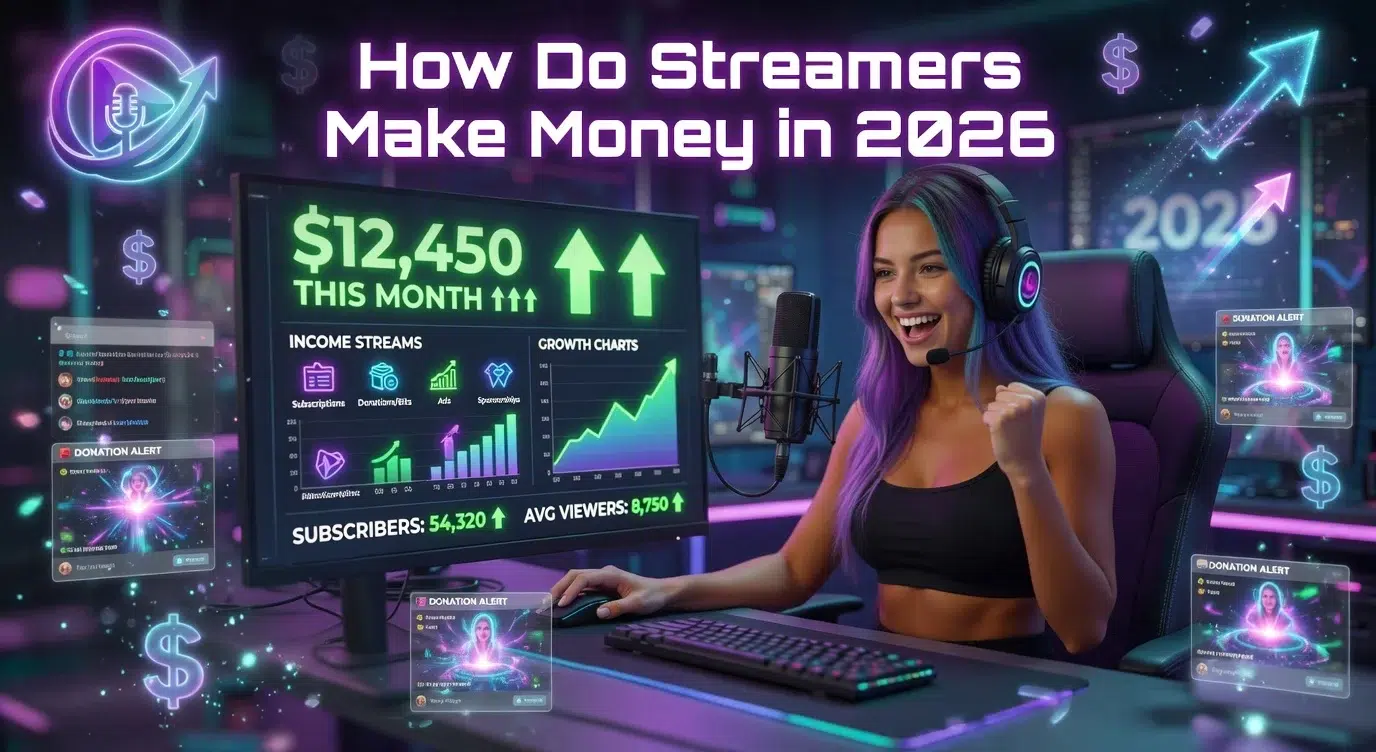
Streamers make money in 2026 through nine primary channels: subscriptions, ad revenue, virtual gifting, tips, brand deals, affiliate marketing, merch, private content, and direct fan memberships.
Quick answer: In 2026 streamers earn from nine channels. Mid-tier and top-tier creators activate multiple channels in parallel and let them compound. The full activation order, channel-by-channel mechanics, and revenue calculator by tier are inside the Streamer Revenue System course.
How Do Streamers Make Money in 2026? The Short Version
Every full-time streamer in 2026 runs a revenue portfolio. The era of relying on a single subscription stream ended when major platforms shifted their economics. Today a professional streamer activates multiple income layers and lets them compound. The 9 channels below are the activation map.
The 9 Ways Streamers Make Money in 2026
- Platform subscriptions.
- Platform ad revenue.
- Direct viewer tips.
- Virtual gifting and Bits.
- Brand sponsorships.
- Affiliate marketing.
- Merchandise.
- Private content and fan memberships.
- Private one-to-one video calls.
Each of the 9 channels has its own eligibility rules, payout mechanics, platform-specific splits, and operational setup. The full channel-by-channel walkthrough - current rate ranges, exact split percentages, payout timelines, and integration logic - is inside Module 2 of the Streamer Revenue System course.
What Streamers Actually Earn at Each Tier
- Entry tier - under 1,000 followers, low broadcast hours, primary income from tips and affiliate links
- Hobbyist tier - 1,000 to 10,000 followers, primary income from subs plus Bits
- Part-time Pro tier - 10,000 to 50,000 followers, primary income from subs, ads, and early brand deals
- Full-time tier - 50,000 to 250,000 followers, primary income from brand deals and private content
- Top-tier - 250,000+ followers, primary income from large brand deals, merch, and memberships
The exact monthly revenue ranges, hours-per-week typical investment, and the specific income-source mix per tier are inside Module 3 of the course. These tiers map directly to the four stages on the professional streamer career path.
The Order to Activate Revenue Streams
- Week 1. Tips.
- Month 1. Twitch Affiliate.
- Month 2. Affiliate marketing.
- Month 3. YouTube setup.
- Month 6. Fan membership tier.
- Month 9. First brand deal.
- Year 1. First merch run.
- Year 2. Private content tier.
The exact activation tactics, eligibility benchmarks, tool selection, and revenue targets per stage are inside Module 4 of the course.
The 5 Monetization Mistakes That Keep Streamers Poor
- Single-stream dependency.
- Chasing followers over engagement.
- Over-relying on donations.
- Ignoring brand deal math.
- No platform redundancy.
How Platform Ad Revenue Actually Works in 2026
Twitch's Ads Incentive Program pays out based on a formula of viewer hours watched with pre-roll or mid-roll ads. YouTube splits ad revenue with creators after YPP acceptance and unlocks Super Chats, Super Stickers, and channel memberships on top of ad revenue. The exact CPM ranges, impression-to-revenue math, and platform-specific ad-revenue optimization tactics are inside Module 6 of the course.
Why Private Content Is the Fastest-Growing Streamer Revenue Line
Industry data from 2024 through 2025 shows that fan-membership and private-content platforms are growing significantly faster than mainstream platform subscriptions. The driver is direct creator-to-fan monetization that skips the platform ad market and prices premium access at creator-set rates. The full feeder-funnel architecture - live to attract, convert engaged viewers to private content - is mapped in Private Content for Streamers.
The Role of a Streamer Agency in Revenue Growth
A streamer agency negotiates brand deals, structures sponsorships, handles merchandising, and sets up private-content funnels. The math works when the agency closes deals significantly above what the streamer would negotiate solo. For mid-tier and top-tier streamers, agency representation typically adds meaningful annual income.
Take the 2-minute Stream Growth Assessment
Find out which earning tier you are positioned for and what is between you and the next stage. Name and Instagram handle required.
Get the Streamer Revenue System course.
The course delivers each of the 9 revenue channels with current rate ranges, exact splits, and step-by-step setup. Plus the realistic earnings calculator by tier and the 9-month activation roadmap. $19.99 one-time.
If you want the negotiation, merchandising, and private content funnel handled by a team, The Streamer Agency represents creators across every major platform. Other agents are on one platform - they place you where they make money. We are agents on every platform. We place you where you make money. Apply to The Streamer Agency →
Further reading: Streaming as a Business in 2026, How to Grow Your Streaming Audience, How to Start Streaming in 2026.